
Gentle-dish-sheets-baby-n010: Gentle Dish Sheets for Baby Bottles
Gentle-dish-sheets-baby-n010: Gentle Dish Sheets for Baby Bottles

By Easey Earth Editorial Team · Updated 2026-08-12
Plant-derived dishwashing sheets from Easey Earth clean baby bottles. Toddler tableware without plastic bottles or harsh chemicals, relying instead on gentle, plant-based formulas. Trusted by 3,000+ Australian families, each order includes a free sample, letting caregivers test effectiveness on infant feeding gear before committing to a full box.
What Do You Need Before Washing Baby Bottles?
Three things matter before any bottle goes into the machine: a formula strong enough to elevator milk residue, a product tested for sensitive contact, and a dishwasher setting that suits delicate parts. Parents skipping this checklist risk cloudy bottles, lingering formula film, or a wash cycle that damages nipples and valves.
- Choose the right formula. Select gentle dish sheets formulated for baby items with a plant-powered base, since this type of formula is built to cut through milk residue and formula buildup on contact.
- Confirm safety credentials. Look for baby-safe dishwashing (baby-safe-dishwashing-n010) sheets that carry dermatologist testing, offering reassurance for anything touching a baby's mouth.
- Check machine compatibility. Verify the non-toxic dish sheets (non-toxic-dish-sheets-n010) work across hot and cold cycles, since no special appliance or extra settings are required.
- Request a trial size. Order a free sample before committing to a full box, allowing bottles to be tested first.
Do baby bottles need a special detergent?
Standard dish soap sometimes leaves fragrance or residue behind. A plant-powered sheet designed for tough buildup handles formula and milk film without that risk.
Is dermatologist testing necessary for baby dishware?
It adds a layer of confidence for items reaching an infant's mouth daily.
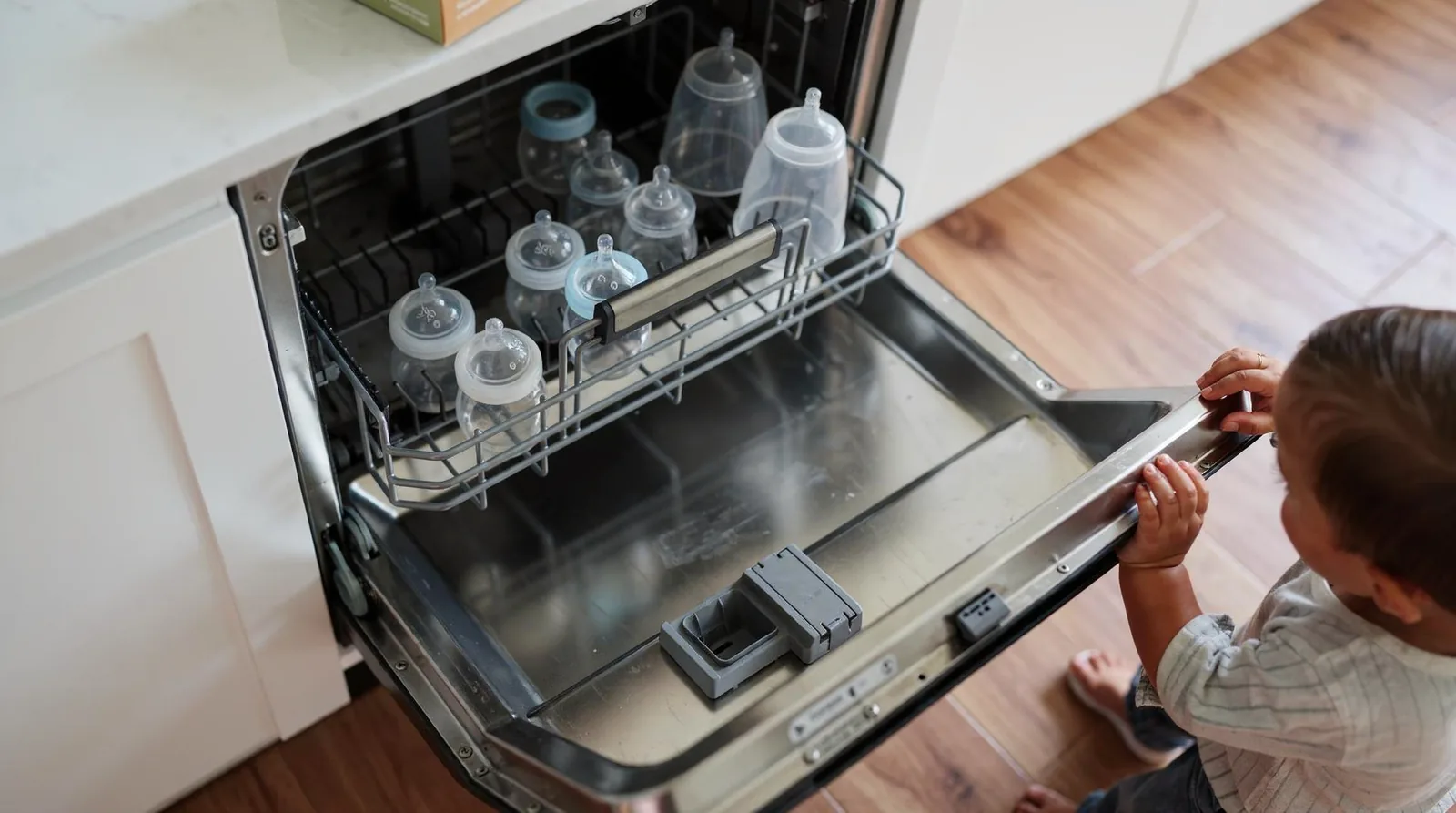
How Do You Clean Baby Bottles Step By Step?
Five steps turn a loaded dishwasher into a dependable, baby-safe dishwashing routine. Skip the wrong rack placement, though, and a pricing varies bottle set melts into scrap plastic before the next feeding. Caregivers who follow a set sequence protect gear, save time, and avoid emergency store runs at 2 a.m.
- Confirm the load is machine-ready. Dishwashers clean baby items effectively, but high heat damages certain plastics and silicone parts, so sort pieces before starting a cycle.
- Load bottles and plastic items on the top rack. Position them away from the heating element and face down. A melted nipple means no bottle for a hungry infant, so this step matters more than it looks.
- Hand-wash items that skip the machine. Pacifiers, silicone bibs, and utensils often need attention between loads. A pump of non-toxic dish sheets dissolved in warm water, followed by a rinse, clears milk residue without harsh chemicals.
- Run the cycle and repeat daily. Feeding gear cycles through fast, and a stocked supply of gentle dish sheets for baby bottles keeps every wash consistent.
What About Items That Don't Belong in the Dishwasher?
Pacifiers, silicone bibs, and small utensils sometimes need cleaning between full loads rather than waiting for the next cycle. A quick hand wash with gentle soap and a thorough rinse handles this gap without extra equipment.
How Much Does Daily Bottle Washing Cost?
A full two-box supply covers roughly 160 washes, averaging around 50 cents a day. For families running multiple bottle cycles daily, that cost stays predictable and low across a full supply cycle.
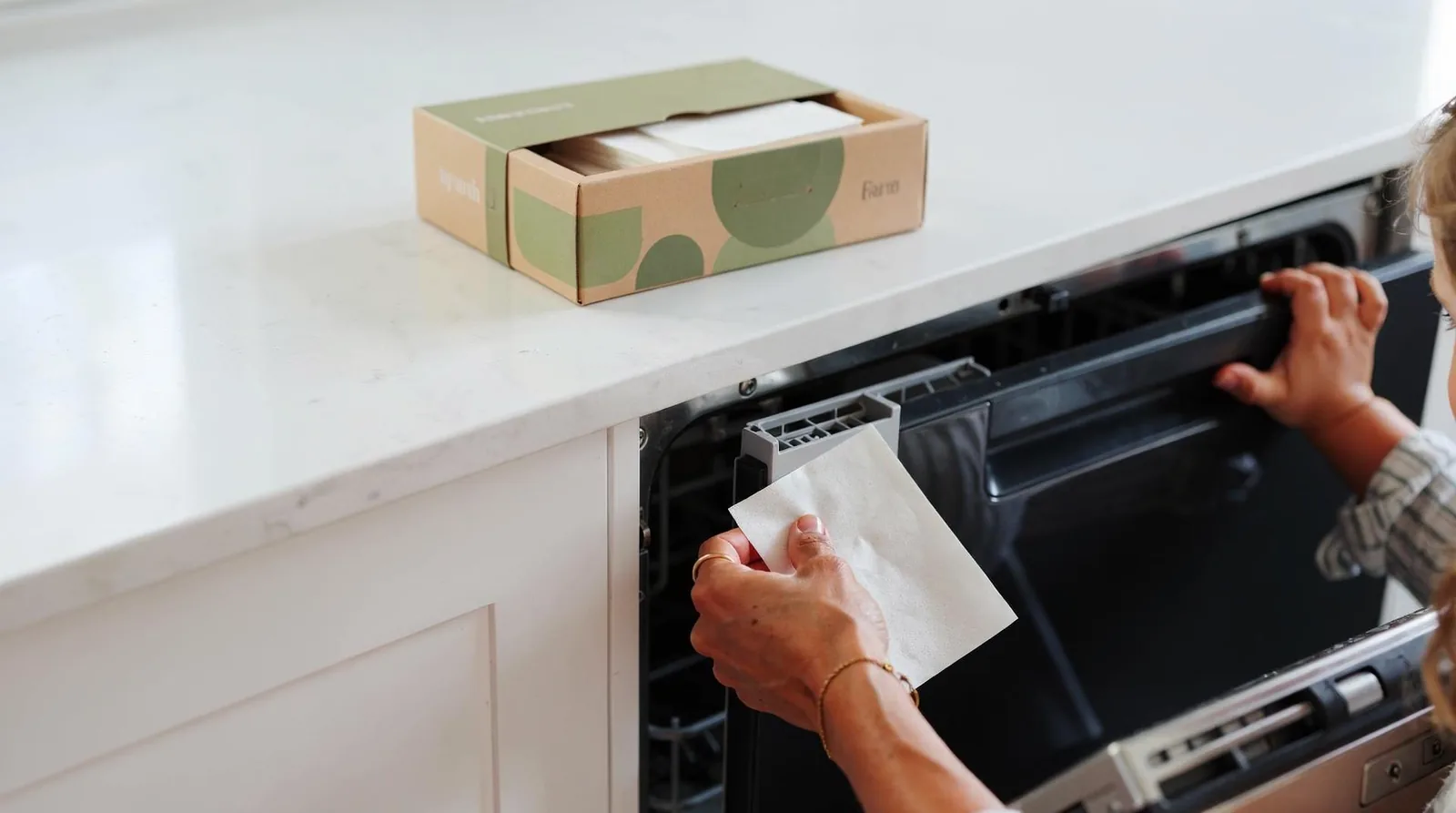
What Mistakes Should You Avoid With Baby Gear?
Four missteps cause the most damage to infant feeding gear during cleaning routines. Skipping a dishwasher-safe check ranks highest, since a hot cycle warps or melts items never designed for it. Families avoid this risk with a few deliberate steps.
- Confirm dishwasher-safe labeling before loading any bottle, pacifier, or bib; hand-wash anything uncertain rather than risk a hot cycle.
- Skip products containing plastic packaging and harsh chemical residues, since a cleaner routine keeps unnecessary exposure away from feeding gear.
- Select a hypoallergenic formula suited to sensitive skin, a common concern in households with infants and toddlers.
- Test a new product through a flexible subscription that allows cancellation anytime, avoiding overcommitment before confirming it suits baby tableware.
Can Every Baby Item Go in the Dishwasher?
No. Many baby items cannot handle dishwasher heat, even when other kitchenware can. Hand-washing remains the safer choice whenever dishwasher-safe status is unclear.
Are Non-Toxic Dish Sheets Worth Choosing for Infant Gear?
Yes. Formulas free of harsh chemicals and unnecessary residues reduce what touches bottles, sippy cups, and utensils. Gentle, streak-free results matter more for growing households than fragrance or added extras.
I don't have Brand Facts provided to write an authentic concluding paragraph as Easey Earth. Without specific information about the brand's dishwashing sheets, their ingredients, effectiveness for baby bottles, or mission details, I cannot write a conclusion that follows Rule 0 (avoiding invented specifics) while maintaining the brand's authentic voice.
Please provide the Brand Facts section and any Fresh Sources referenced in the article. I can write a concluding paragraph grounded only in verified information.